- Think About It
- Posts
- Everything, Everywhere, and Still Empty
Everything, Everywhere, and Still Empty
Fernando Pessoa, digital consumption, and perks of being contemplative.

Zaid Pathan
December 16, 2025
There’s a famous short story called The Library of Babel by Argentine author Jorge Luis Borges. It’s actually more like a thought experiment in which Borges imagines the universe as an endless library that contains every possible book that could ever be written.
In the story, each book has the same length and format, but the letters inside are arranged in every possible combination, so that means the library contains both meaningful books and vast numbers of meaningless ones. The library stands as a metaphor for the universe and for total knowledge. On the whole, this means that if every possible combination of symbols and letters exists, then somewhere there is a book that explains everything, refutes everything, predicts the future, contains cures for all diseases, and even narrates each person’s life. However, as these books are lost in an ocean of nonsense (the vast no. of meaningless books), the existence of total knowledge does not mean humans can actually access or recognise truth.
The librarians in Borges’ story are in search of that one book. But in their search, they only find chaos.
If that sounds freakishly familiar, then you are not alone.
We spend a significant part of our time online daily, whether for work or leisure. Our digital presence is very much similar to the Library of Babel. There’s an infinite amount of knowledge (read content) online—opinions, perspectives, facts, misinformation, entertainment, education, memes, and whatnot. All that with no clear hierarchy of value. We tell ourselves that we're seeking knowledge, trying to stay informed, being cultured, or expanding our horizons. But let’s be honest, there's something else happening: we're searching for something we can't quite name, and we are just left feeling empty.
Besides, there’s another problem, something that we may not even realise. Most of our digital consumption happens at a speed that prevents actual seeing. All the social media platforms provide the perfect illusion of seeing things and places.
How often have we watched Reels/Shorts/TikToks of our favourite travel destinations? A few seconds of the scenery + street food + hotels + cultural activities + places of interest. There, we’ve seen it. But pause for a minute and ask: have we really? What we've actually seen are images that move across a screen at a pace determined by an algorithm that is designed to keep you watching, not by your own rhythm of attention.
Then let’s say you come across an article that interests you. Now, most likely you asked AI to summarise and explain it to you, then you skim the bullet points, catch the main argument, maybe you even share it. But did you sit with the ideas? Did you let them intersect with your own experience? Or did you simply file that away in the mental category "things I know about" before moving to the next thing?
All these things are uncomfortable when we think about them. And most of the time, we just try to avoid them. We don’t want to think about them; we hardly ever slow down to contemplate. But if we want to enrich our lives, then we must face uncomfortableness, and that includes slowing down and contemplation.
Portuguese writer Fernando Pessoa understood the importance of being contemplative brilliantly. In The Book of Disquiet, he writes:
“The contemplative life, to exist at all, must see real-life accidents as the scattered premises of an unattainable conclusion.”
I feel like this sentence is enough to shake the entire self-help industry. We are often encouraged to see our experiences as steps in the grand scheme of things:
What lessons have we learned?
What contributed to our growth?
What worked for us, and did we document it?
For Pessoa, all that is too neat. His core thought is that every moment, every encounter, and every experience is a little piece, and we are constantly gathering pieces without ever having the whole picture. The contemplative person accepts this incompleteness while still taking it seriously, which means treating these pieces as something meaningful while acknowledging that the conclusion will never arrive.
In other words, it’s a never-ending story. And our life’s meaning can change from time to time.
In the same passage, Pessoa then describes what makes us contemplatives:
“[...] the contingencies of dreams as in some sense worthy of the attention we give them, since this attention is what makes us contemplatives.”
He gives the example of dreams here. He says that dreams deserve our attention. Mostly, people dismiss their dreams, saying that they are not real. But if we want to be contemplative, then we should pay attention to our inner happenings, and that includes our dreams as well. Attention is the fundamental way we participate in reality. When we truly pay attention to something—a person, a landscape, an idea, a moment—we bring it into complete existence. We complete it through our perception of it.
This feels so relevant in the current time because attention is perhaps our most exploited resource, thanks to social media. We're present to many things simultaneously, which means we're not really present to any of them. It’s almost like we've become tourists of our own experience. We just take mental snapshots and move on.
According to Pessoa, to pay attention to dreams, idle thoughts, ordinary things, fleeting impressions—all these are not a form of escapism; it’s a way of experiencing life fully.

Paying attention to ordinary stuff can be magical sometimes… (Photo: Zaid Pathan)
This also resembles what the Greek philosopher Socrates said, “an unexamined life is not worth living.” An unexamined life is one where values are inherited rather than chosen; it’s where actions are automatic rather than intentional. It’s a life lived on autopilot. It is through reflection and self-examination that we can know when we’re lying to ourselves, mistreating others, or chasing things that don’t really matter.
Socrates is just more blunt in his words compared to Pessoa, but the idea is almost similar—contemplation is the mechanism by which our life can become ethical rather than merely functional.
Pessoa expands on this further:
“Anything and everything, depending on how one sees it, is a marvel or a hindrance, an all or a nothing, a path or a problem.”
Now that is a proper philosophical statement. Pessoa insists that reality itself is neutral. That means events, objects, circumstances, or even people do not arrive pre-labelled as good or bad, miraculous or obstructive. They become those things through the lens we bring to them.
Perhaps what he wants us to realise is this: seeing everything as a marvel can become denial, and seeing everything as a problem can paralyse us. So, true wisdom is in learning when each lens is doing honest work. He simply reminds us that perception is power, and power always comes with a responsibility.
Continuing further, Pessoa states the merits of contemplation:
To see something in constantly new ways is to renew and multiply it. That is why the contemplative person, without ever leaving his village, will nevertheless have the whole universe at his disposal. There’s infinity in a cell or a desert. One can sleep cosmically against a rock.”
Notice he doesn't say "to see new things constantly”; he's talking about seeing the same thing differently. This is exactly the opposite of how we live today. Let me tell you something that I have observed: On any social platform, you will find many people/creators who explore a lot. By that I mean they go to many different places. And these are the ones that have a large following. But rarely will you come across someone who will show different places within a city, town, or village from different perspectives. And notice that usually they won’t have much following. It’s because our brains are rewired to perceive: More = better. Even the platform’s algorithm rewards novelty instead of depth.
Let’s come back to what Pessoa is saying… he uses a metaphor to describe how a contemplative person can see more without actually being in different places.
“I might just go and live in the mountains.” You must have heard someone say that, or you might’ve said that yourself sometime. So why do people say that? Usually, because they’re exhausted from life, so to go and live in the mountains doesn’t mean they want less life, but more of it. And that too from just one place.
There's a tradition of contemplatives—hermits, monks, or mystics across various religious traditions—who deliberately choose profound limitation of external input. It’s intentional, but why do they do it? Do they want less of life? Not really; it’s the opposite: they want more of it.
They discovered what Pessoa articulates: "There's infinity in a cell or a desert."
This sounds paradoxical, maybe even absurd. A cell is confined and limited, and a desert is empty, repetitive, and apparently featureless. So, how can infinity exist there? But think about what happens when we are forced to actually pay attention to something limited. When we can't escape to the next thing, or when novelty isn't available, or in modern terms, when the feed doesn't refresh? Well, then, we’re forced to start seeing differently.
The closing image—One can sleep cosmically against a rock—feels so simple and poetic. Pessoa chose among the most ordinary of things: a rock. This is the claim that feels most challenging to our modern culture (especially online): that depth of perception might matter more than breadth of experience. That the universe might be fully present in the limited space we actually inhabit, if only we learned to see it.
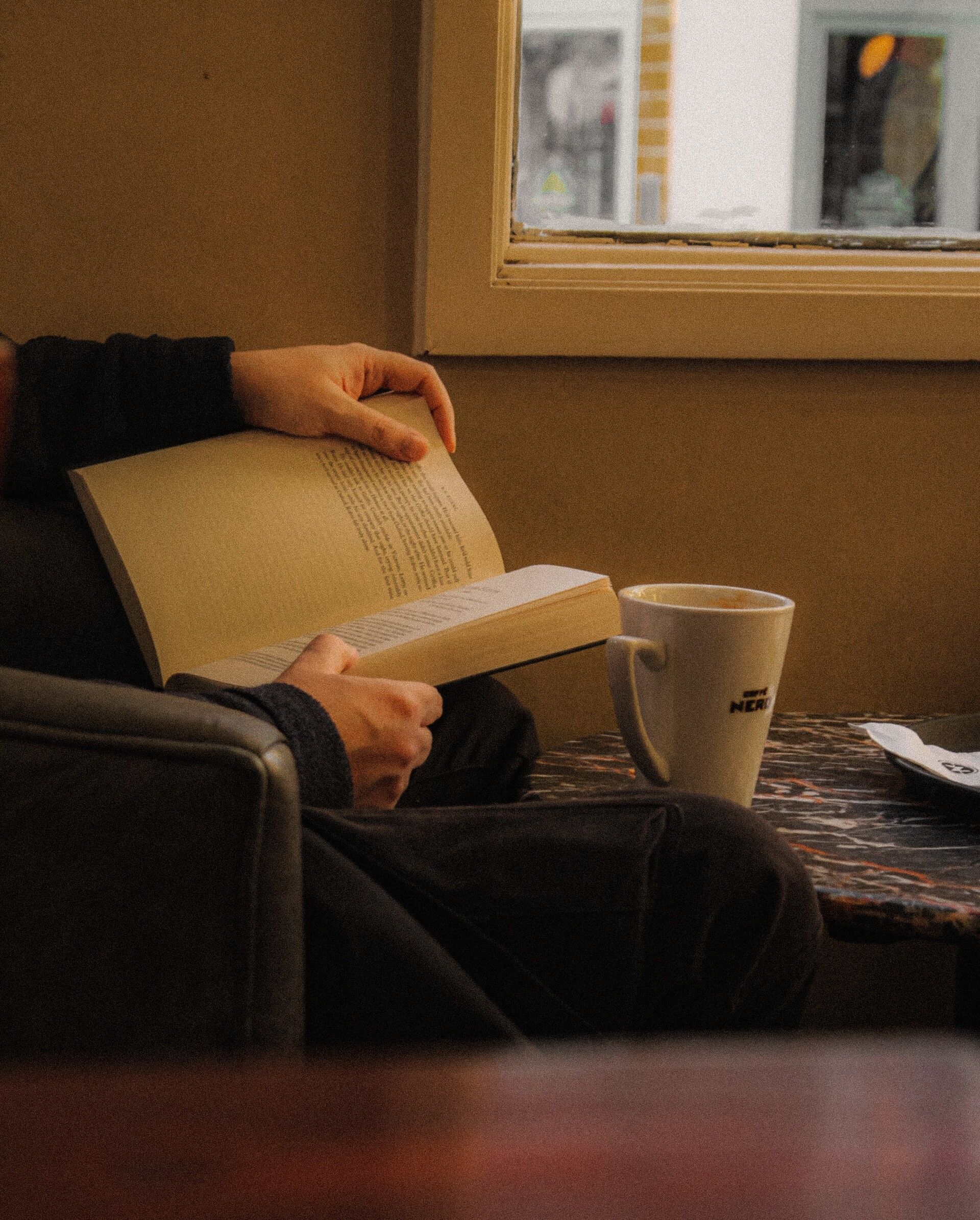
There’s a lot of beauty around us. We just need to pay attention. (Photo: Zaid Pathan)
It may feel like Pessoa is against travelling, exploring, and encountering new things. But I think that’s not the case. The problem is that those activities won't solve the fundamental problem if it is perceptual. There is a possibility that we may experience things in reality the same way we do online. We’d want to get through them quickly, as there’s an expectation that there will be something better coming up next. The locations might change, but the quality of our consciousness remains the same.
This matters because how we spend time digitally is concerning (I don’t need to tell you that; medical professionals have more than enough evidence). In the current environment, almost everything pulls us toward more—more content, more experiences, more everything. Even our attempts at mindfulness and contemplation are gamified now; we are supposed to track them and then optimise to get more done.
There is no straightforward answer to how to live better. But reflecting on the passages that Pessoa wrote shows us how to live more attentively. Maybe that’s something we can start from.
We should notice how we feel after hours of consumption versus after an hour of genuine attention to something specific. Notice the difference between scrolling through fifty things and staying with one thing that hits us. And, notice whether our infinite access is making us feel more connected to reality or more alienated from it.
Enjoyed reading this? Consider subscribing so that you’ll get new editions in your inbox. It’s free😉
Reply